Photo by: Shutterstock

Shutterstock

How Much of Your Body Is Water? That All Depends

By: Ashley Hamer

The water in your body changes throughout your life.

August 01, 2019

There are some things you learn in school that never leave you. Your skin is the largest organ (true!). Your tongue is the strongest muscle (false). Your body is 70 percent water. True? At least, it was true at one point. Depending on a number of factors, your body could be a lot drier than that.

Photo by: Shutterstock

Shutterstock

It's All Downhill From Here

When you were born, you contained the most water, percentage-wise, that you ever will. Human babies are about 78 percent water by weight. But within a year, your water content had already dipped below that classic 70 percent factoid your teachers taught you, weighing in at about 65 percent. You maintain that level of moisture throughout your childhood.

Around puberty, when noticeable sex differences take the stage, the water levels in boys and girls start to differ. That's thanks to two things: muscle contains more water than fat, and women have more body fat than men. As a result, teenage boys' bodies are about 60 percent water, while teenage girls' bodies are drier at about 55 percent. By adulthood, the differences are even more pronounced: Adult men are around 60 percent water while adult women average around 50 percent. After 50, your body is sapped even more, with men at around 55 percent water and women at 47 percent.

My, What Wet Kidneys You Have

Of course, those are just averages. There are other elements at play when it comes to how much water your body contains. Since muscle contains more water than fat, the fittest people contain the most water of people their age, while those with the most fat contain the least.

Your organs have different moisture levels, too. Your lungs, brain, heart, liver, and kidneys are the wettest, between 65 and 85 percent water. Surprisingly, your blood doesn't even make the top five: plasma, the liquid portion of blood, may be 92 percent water, but it only makes up 55 percent of your overall blood volume. Bones are among the driest parts of the body's puzzle but still contain a respectable 31 percent water.

All that water has a long list of duties, from insulating your organs and lubricating your joints to forming the very building blocks of cells. And of course, the water that escapes you in sweat and urine helps to cool you off and rid your body of waste (although sweat isn't as detoxifying as you might think). Whether you're 70 percent water or 50 percent, chances are you've got all the water you need to keep things running smoothly.

This article first appeared on Curiosity.com.

Next Up

Neuroprosthetic Sensory Devices are Reconnecting People to the World

Sensory loss has a profound effect on millions of people’s everyday lives. Sight, hearing, touch, smell, and taste can all be affected, diminishing their experience of the world. But now, thanks to neuroprosthetic technology we can tap into nerve and brain function, and rewire these lost connections.

Melting Glaciers Could Flood Society with Problems

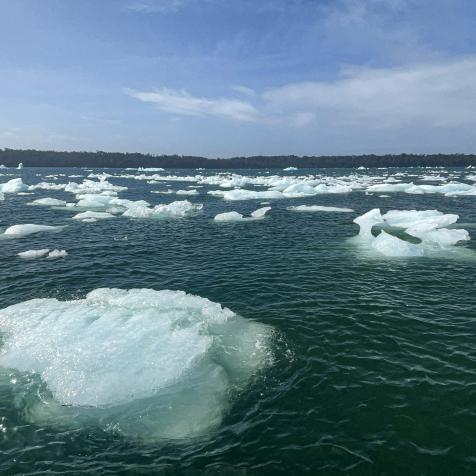
Earth’s glaciers are both a precious resource and a fragile ecosystem that is disappearing quickly due to global warming. Scientists warn that glaciers will vanish from the mainland US within decades. And their rapid melting is dangerous to society and the natural systems we rely on.

How a Lizard Loses Its Tail (and More Importantly, Keeps it Attached)

Thanks to a complex internal structure, lizards can shed a tail in a pinch… yet keep their tails attached when they need them.

How to Save Humanity from Extinction

Here are some goals we need to achieve if we want to reach our 500,000th birthday as a species.

Insect Feed Can Transform the Farming Industry

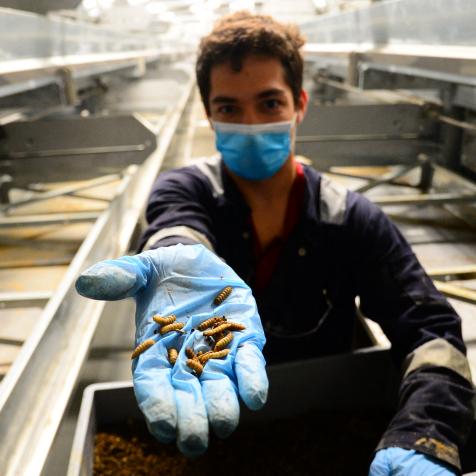
Feeding insects to farm animals could be the environmental revolution that the livestock industry has been waiting for. Insects, a rich source of protein and part of the natural diet for pigs, poultry, and fish, use a fraction of the land and water needed to raise soybeans for feed and produce lower carbon emissions.

How Do We Know How Old the Sun Is?

Scientists estimate that our Sun is about 4.57 billion years old. They’re surprisingly confident about that number, too, which opens up an immediate question: how do we know that? The short answer is “a lot of science and math”, but I have a feeling you’re not here for the short answer.

Does this Incredible New Discovery Mean We Should Believe in Fairies After All?

Archaeologists in China recently unveiled a fascinating new discovery of ancient communities worshiping fairies, after unearthing a “one of its kind” treasure trove at the famous Sanxingdui archeological site.

Plucking CO2 from the Air Could Decarbonize Food, Fuel, and Fashion

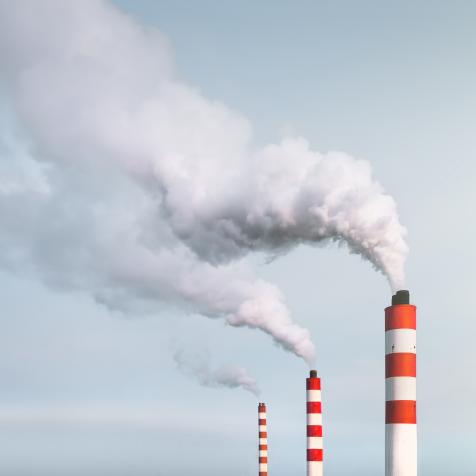
Products made from carbon dioxide (CO2) captured from the atmosphere are part of a fast-growing trend to decarbonize nearly everything we use. Food, drink, fuel, and plastics can all be made using CO2 from the air. And recycling carbon could create a circular economy that vastly reduces pollution and waste.

Carbon Conversion Turns Dangerous Greenhouse Gas into Fuel

Carbon dioxide (CO2) emissions are a grave environmental problem. This persistent greenhouse gas produced by fossil fuels is relentlessly warming Earth’s climate. Technologies to reduce its levels and climate impact concern us all. So can breakthroughs that use CO2 to create new fuels help solve the problem? Potentially, yes.

Building Atlantropa: One Man’s Plan To Drain the Mediterranean Sea

Atlantropa may be the most bizarre and ambitious environmental project you have never heard of.